


News Center
Recommending Products
Contact: Mr. Jin
Tel: 13901575780
0512-52428686
Contact: Mr. Zha
Tel: 13913639797
0512-52422071
Address: No. 59, Huyi Road, Liantang, Shanghu Town, Changshu City, Jiangsu Province.
What are the applications of slitting circular knives in the metal processing industry
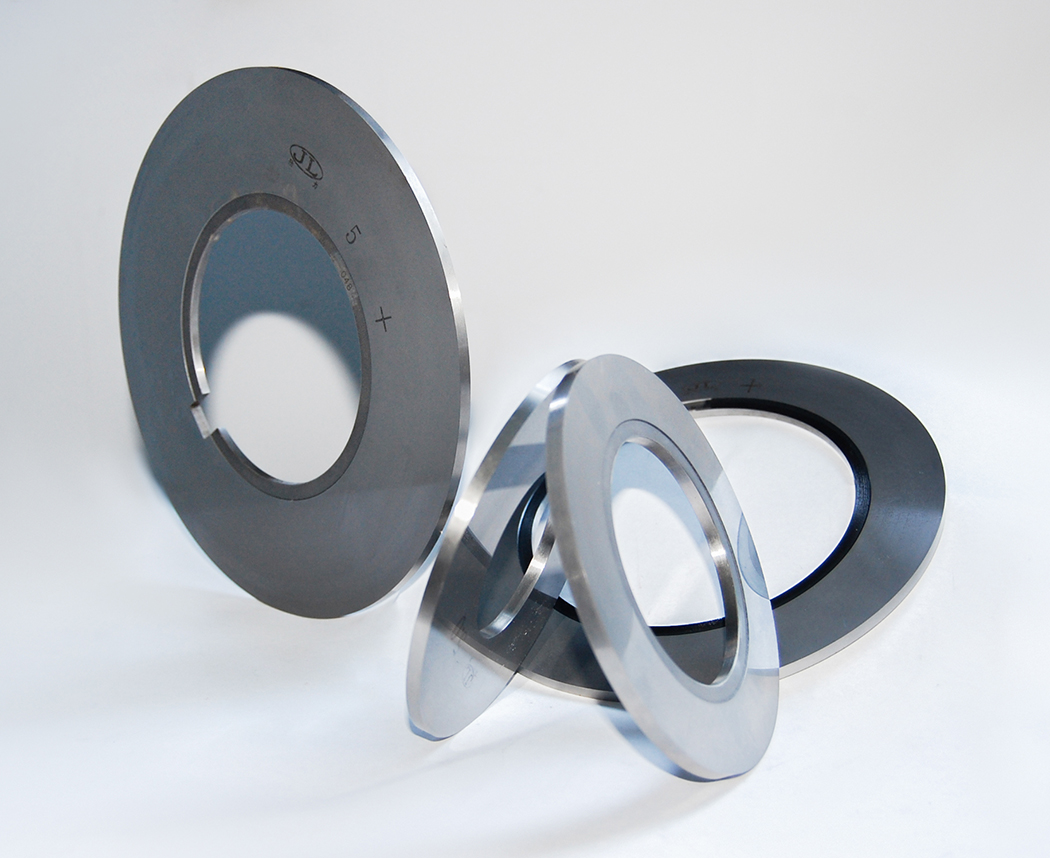
The slitting round knife, with its high hardness, sharpness, wear resistance, and heat resistance, is the core tool for correctly slitting metal coils and sheets in the metal processing industry. It is widely used in key processes such as coil slitting, thin plate cutting, and precision part processing. The specific application scenarios are as follows:Sources:www.hncsjx.cn | PublishDate:2025.12.08
1. High precision slitting processing of metal coils
This is the core application scenario of the slitting round knife, which is adapted to the slitting needs of various metal coils, cutting large width coils into narrow specifications to meet downstream processing needs:
Carbon steel/stainless steel coil slitting: In the fields of metallurgy and hardware processing, a slitting round knife is used in conjunction with a slitting machine to slice carbon steel and stainless steel coils with a width of 1-2m into narrow strips ranging from a few millimeters to tens of centimeters, which are used to make steel pipes, steel strips, metal stamping parts, etc; The cutting tool is made of hard alloy or high-speed steel material, which can withstand the high-strength friction of metal coil and ensure that the cutting edge is free of burrs and warping.
Cutting of non-ferrous metal coils: For soft metal coils such as copper, aluminum, and zinc, the cutting round knife adopts a sharp edge and low cutting resistance design to avoid metal adhesion or deformation during cutting. The cut copper and aluminum strips can be used for the production of cable conductors, battery foils, decorative panels, and other products.
2. Cutting and cutting of metal sheets
Suitable for cutting and processing metal sheets with a thickness of 0.1-3mm, especially suitable for mass production scenarios:
Sheet metal processing and cutting: In the sheet metal industry, slitting circular knives can be used in conjunction with cutting machines and rolling cutters to vertically or horizontally cut cold-rolled sheets, galvanized sheets, and other thin sheets, correctly cutting the required size of sheet metal for the production of components such as chassis, cabinets, and home appliance casings; Compared to laser cutting, circular cutting has higher efficiency and lower cost, making it suitable for large-scale standardized production.
Precision cutting of metal foil materials: For extremely thin metal foils with a thickness of less than 0.1mm (such as copper foil and aluminum foil used in lithium batteries), an ultra-fine tooth cutting circular knife is required to achieve micrometer level precision cutting on high-precision cutting equipment, ensuring that the edges of the foil material are flat and free of tensile deformation after cutting, meeting the strict requirements of battery electrode processing.
3. Cutting and slotting of metal pipes and profiles
Metal pipe slitting: For welded pipes, seamless pipes and other pipes, the slitting round knife can be used for fixed length cutting of pipes, or cutting into special specifications such as half pipes and curved pipes along the axial direction of pipes, suitable for the processing needs of guardrails, furniture supports and other products; Partial circular knives can also be paired with specialized fixtures to achieve oblique and bevel cutting of pipes.
Irregular profile slotting: In the processing of aluminum and steel profiles, a slitting circular knife can be used as a slotting tool to cut the correct grooves and gaps on the surface of the profile for splicing and assembly. It is commonly used in the processing of door and window profiles and industrial frame profiles.
4. Edge finishing and trimming of metal products
Some metal processing parts may produce excess burrs and flying edges after stamping and bending. The slitting round knife can be used as a finishing tool to trim the edges of the workpiece, remove burrs and ensure edge flatness, improving the appearance and assembly accuracy of the product. For example, the edge finishing process of hardware accessories and automotive parts is often completed using small cutting circular knives in conjunction with CNC equipment.